

The Work Beneath the Work - Starting the Year Well
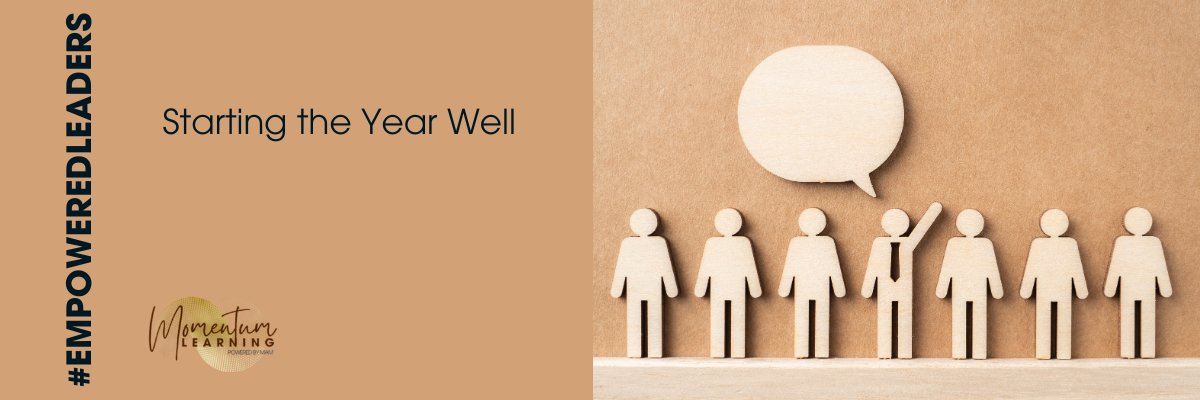
“Can we talk about how we want to work together this year?”
It is a simple question. It often feels awkward. It is almost always worth asking.
Starting the year well is not about certainty. It is about intention. About recognising that how a team works together under pressure is shaped early, either deliberately or by default.
Leadership scholar Linda Hill reminds us that leadership is about creating the context in which people can do good work together. That context is built through early conversations that clarify expectations, norms, and boundaries.
These conversations include how disagreement will be handled, what matters when time is tight, and how feedback will be given when stakes are high. Teams that invest in these conversations early are not immune to difficulty. They are simply less surprised by each other.
Reflective questions
What conversations have we already had about how we will work together?
Which ones have we avoided or postponed?
What would starting well look like for us this year?
Have a great week
Mary-Anne
The Work Beneath the Work - Why Emotional Capital Matters
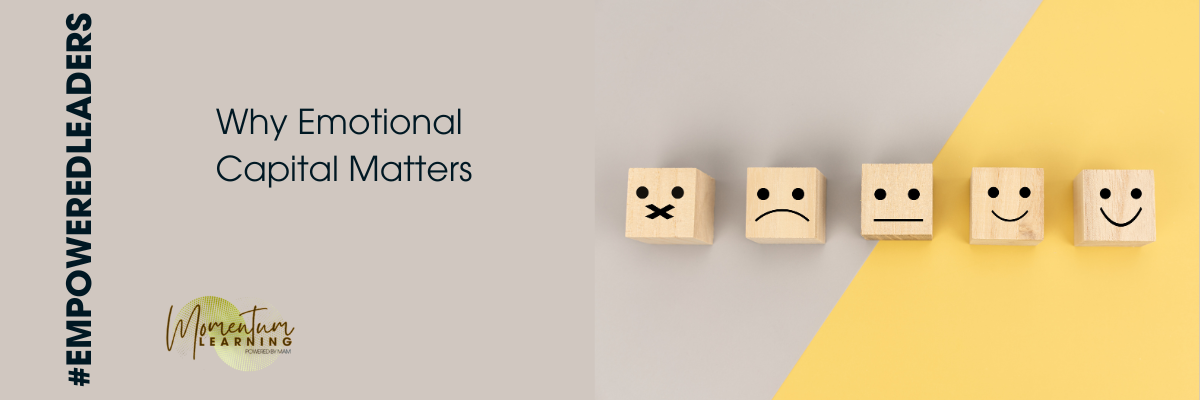
What really happens in your leadership team when pressure rises?
Not the agenda.
Not the protocols.
Not the carefully worded norms on the wall.
What actually happens in the room?
Because before any decision is made, before any strategy is agreed, something quieter and more powerful is already at work.
Emotion.
The reality we don’t name
Emotions are already present in leadership teams.
They shape how feedback lands, how safe it feels to challenge an idea, and how quickly frustration escalates—or shuts down discussion altogether. Ignoring this reality doesn’t make teams more rational. It simply makes emotional dynamics harder to see, name, and manage.
Under pressure, this matters even more.
Neuroscientist Antonio Damasio demonstrated that emotion and cognition are inseparable. When stakes are high and time is short, emotional signals increasingly guide behaviour and decision-making.
This means that leadership is never just a technical exercise. It is always a nervous system exercise too.
What happens when emotional dynamics go unacknowledged?
When emotional signals are ignored or misunderstood, teams don’t suddenly become inefficient because they lack skill or commitment.
They become reactive because their nervous systems are overloaded.
Decisions are rushed.
Tone sharpens.
People retreat into certainty, defensiveness, or silence.
Not because they don’t care - but because their capacity to think clearly is compromised.
Emotional capital: the work beneath the work.
Emotional literacy gives teams a steering wheel instead of a brake.
Teams with strong emotional capital can notice when they are reacting rather than responding. They recognise when stress, fatigue, or frustration is shaping behaviour. They know how to slow the pace, lower the temperature, and recover after difficult moments - without blame or drama.
This is not therapy.
It is leadership capability.
In complex environments, emotional steadiness is foundational to sound judgement, trust, and long-term sustainability.
Reflective questions
How does emotion currently show up in our team when pressure increases?
What happens to our decision-making when stress levels rise?
What would emotional steadiness look like in everyday practice for us?
Go steadily this week
Mary-Anne
The Work Beneath the Work - When Awareness Changes Things
The Work Beneath the Work - When Awareness Changes Things
Someone finally names the thing everyone has been thinking.
The room goes quiet.
Not awkward quiet.
Thinking quiet.
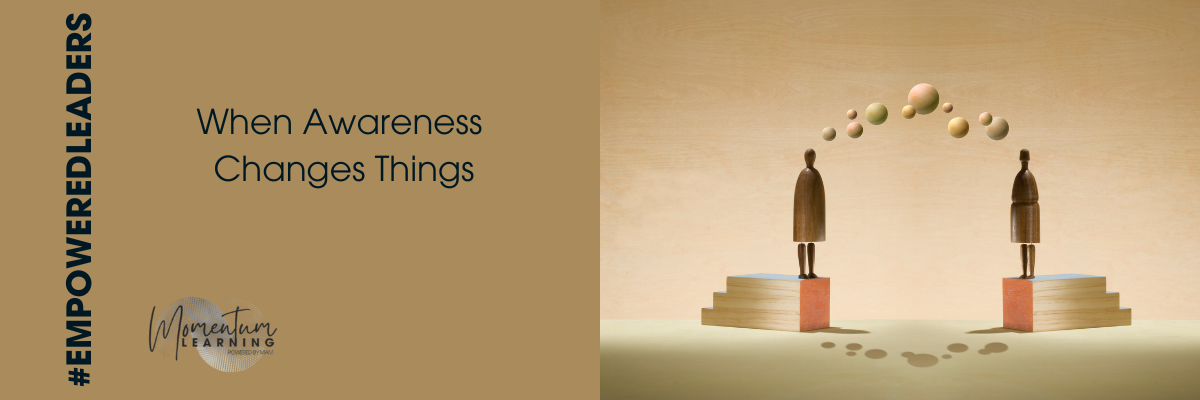
Moments like this are inflection points. What shifts is not the problem itself, but the fact that it is now shared. Something that was previously carried privately is placed in the centre of the room, where it can be seen, examined, and responded to together.
For weeks or months, individuals may have been holding the same concern silently. Each unsure whether they are the only one noticing it. Each managing their own interpretation rather than testing it collectively. When someone finally names it, the emotional load redistributes.
This is not about confrontation.
It is about clarity.
Organisational psychologist Edgar Schein described culture as the pattern of shared assumptions a group learns over time. When those assumptions remain unexamined, they quietly shape behaviour. When they are surfaced and discussed, teams regain choice.
Shared awareness creates space.
Space to slow reactive responses.
Space to separate intent from impact.
Space to respond rather than defend.
When teams can name what is happening between them, not just what they are doing, conversations change. Issues surface earlier. Feedback becomes more direct and less emotionally loaded. People stop carrying concerns in isolation.
The work does not become easier.
But it becomes shared.
Shared awareness does not require agreement. Teams can name an issue and still disagree about the path forward. What changes is that disagreement happens in the open, rather than through silence, side conversations, or withdrawal.
Over time, this builds practical trust and resilience that compounds under pressure.
Reflective questions
What might our team be carrying silently right now?
How safe is it for someone to name what others are already noticing?
What becomes possible when concerns are shared rather than privately managed?
Go with clarity this week
Mary-Anne
The Work Beneath the Work - How Teams Really Work
How Teams Really Work
Most leadership teams believe they understand how they work together.
They know who brings ideas, who keeps things moving, who asks the hard questions. Over time, teams develop rhythms and roles that feel familiar and functional. Much of the time, these ways of working are effective.
Until pressure arrives.
Under pressure, something shifts. Conversations shorten. Decisions speed up. Curiosity narrows. People stop raising concerns that feel risky or inconvenient. Silence begins to substitute for agreement. These changes rarely arrive all at once. They accumulate quietly until the team realises it is no longer having the conversations it once did.
This is not a failure of character or commitment. It is a predictable response of human systems under load.
Psychologist Daniel Kahneman demonstrated that when cognitive load increases, people default to habits rather than reflective thinking. Teams behave the same way. Under pressure, they revert to what feels efficient, familiar, or safe, even when those habits no longer serve the work.
Pressure does not fundamentally change a team.
It reveals it.
What becomes visible under pressure are the underlying patterns that were already present. Who speaks when time is tight. Who withdraws. How disagreement is handled. Whether questions are welcomed or quietly discouraged.
Many teams misinterpret these patterns as interpersonal issues. Someone is “difficult.” Someone else is “disengaged.” In reality, what they are seeing are systemic responses to pressure.
When teams build shared awareness of these patterns, behaviour stops feeling personal. Curiosity replaces blame. Conversations become clearer and less emotionally charged. Decisions become more deliberate.
Shared awareness does not remove pressure.
It reduces friction.
And reduced friction frees up energy for the work that actually matters.
Reflective questions
What patterns show up most clearly in our team when pressure increases?
Which of these patterns help us, and which quietly get in the way?
What changes if we treat these as system behaviours rather than personal traits?
Go with shared awareness this week
Mary-Anne
The Work Beneath the Work - The Year Forms Early

By the time you notice the year has picked up pace, it already has.
Calendars fill quickly. Meetings stack. Decisions are made at speed. Everyone is capable. Everyone is committed. Nothing appears obviously wrong, and yet something subtle is already forming beneath the surface.
Leadership teams rarely pause at the beginning of a year to consciously decide how they will work together when pressure arrives. How disagreement will be handled. How safe it will be to question decisions. How quickly tension will be named. Instead, these patterns are set quietly, early, through small interactions that feel insignificant at the time.
Who speaks first in meetings.
Who gets interrupted.
What happens when someone hesitates or softens their view.
These moments do not feel strategic. But they are deeply influential. They send signals about what is valued, what is risky, and what is better left unsaid.
Early habits form quickly, like wet concrete. At first, there is room to adjust and reshape. Later, the shape is set and teams find themselves working around patterns they never consciously chose.
This reflects the research of Amy Edmondson, whose work on psychological safety shows that teams learn very early whether it is safe to speak up. That belief is not established through a policy or a values statement. It forms through repeated everyday signals about voice, response, and consequence.
When teams describe a year as heavy or exhausting, the cause is rarely a single event. More often, it is the accumulation of small, unexamined habits that hardened quietly over time.
Starting strong together is not about perfect conditions or grand plans. It is about noticing what is forming while there is still room to influence it. Once pace accelerates, teams default to whatever was established early. Changing course midstream always costs more energy than shaping direction at the start.
Strong years are not accidental. They are shaped early, deliberately, and often without fanfare.
Reflective questions
What patterns are already forming in our team this year, even if we haven’t named them yet?
Whose voices are most present, and whose are quieter?
What is one habit we could shape now, before it hardens?
Start strong this week
Mary-Anne