
Is your child struggling to make friends? How SEI skills can help.
Making friends is not something that comes naturally to all children.
It’s hard to see your child being left out and not included, but it doesn’t mean your child isn’t likeable, has anything wrong with them or doesn’t get invited to events because of their personality.
It just means that they need some help building social skills. Social-emotional intelligence (SEI) is a toolkit that can help.

Mary-Anne Murphy
Making friends is not something that comes naturally to all children.
It’s hard to see your child being left out and not included, but it doesn’t mean your child isn’t likeable, has anything wrong with them or doesn’t get invited to events because of their personality.
It just means that they need some help building social skills. Social-emotional intelligence (SEI) is a toolkit that can help.
Skills kids need to make friends
Making and keeping friends is a skill. Even kids who are shy or who are struggling with impulse behavioural issues and things like delayed speech or ADHD can make friends. SEI provides children with a tangible framework they can use in everyday situations to help them make friends.
Such as:
How to pick up on and respond to social cues
How to listen attentively to others so they can understand what is being said
How to share and take turns
How to start a conversation
How to disagree appropriately
How to label their emotions to effectively communicate their feelings.
With a bit of encouragement and validation, every child can find the confidence to use their new tools and start practising their friendship skills.
Why do some kids struggle to make friends?
Sometimes children struggle to make friends simply because they haven’t met another child they feel that they can connect with.
It could also be that a child has had a negative experience or two and now feels too anxious or nervous to be the first one to reach out. Some children get as far as starting a conversation but might not know how to keep one going. They sometimes personalise responses from other kids that might not be familiar to them.
For example, if they say hello to a child but the other child doesn’t say anything back. They might feel as if they have done something wrong, not knowing that the other child might have a hearing disability and simply didn’t hear them.
Basic communication and language skills become a bigger barrier if kids don’t know how to navigate through them.
This is something that SEI is perfect for, it helps kids be more confident with their friendship-making skills and gives them tools to explore different dynamics and be brave in new situations.
"A single act of kindness throws out roots in all directions, and the roots spring up and make new trees." Amelia Earhart
Is it normal for my child to not have friends?
Every parent wishes for their child to be socially adept, happy and curious, open to finding a commonality with anyone.
But in real life, kids can be shy and nervous, feel overwhelmed and overstimulated and become reluctant to work their way through their hesitations. If they haven’t had much experience socially, they might not have a reference to draw from.
This is why developing good SEI skills can have a hugely positive impact on your child's overall social well-being and happiness.
SEI skills that can help your child make friends
These are just some of the social-emotional skills that can help your child make and keep friends.
Empathy
Helps kids connect emotionally
Interpersonal skills
Helps kids to establish social awareness
Assertiveness
Helps kids to communicate feelings and set boundaries
Conflict resolution
Helps kids to develop confident problem-solving solutions
It will help them to:
Better understand themselves and others
Have the courage to persevere even if it doesn’t go right the first time
Learn how to invite other children to join them
Have the confidence to accept an invitation from others.
Friendships need a good level of social and emotional competence to thrive and social-emotional learning skills can help children to develop these concepts in their younger years, setting them up to be well-rounded, happy adults.
As caregivers, we can answer the call for compassion. For us to bring the heart back into our humanity. It starts with us, and our children will lead the way.
If you would like to know more about how to support your child or students access these skills, get in touch with us, we would love to hear from you.
Work with Us
Momentum Learning has been supporting Leaders, Teams, Teachers, Rangatahi and their Whānau to develop their social and emotional intelligence since 2020. Talk to us about exploring this for your organisation.
Let’s work together.
How Social-Emotional Intelligence can build resilience in teenagers
Teenagers. Raising them sometimes feels like you are trying to eat vinegar through a fork. And just because you were a teenager once, doesn’t necessarily prepare you for raising one of your own.
The hardest thing as a parent is seeing someone you love more than anything else in the world (who may not love you at the time) make mistakes - some of them big ones - and not intervening.
Giving teenagers a social-emotional intelligence toolbox and then providing opportunities to learn how to apply them in real-life experiences, are the kind of gifts that set kids up for life.

Mary-Anne Murphy
Teenagers. Raising them sometimes feels like you are trying to eat vinegar through a fork. And just because you were a teenager once, doesn’t necessarily prepare you for raising one of your own.
The hardest thing as a parent is seeing someone you love more than anything else in the world (who may not love you at the time) make mistakes - some of them big ones - and not intervening.
Giving teenagers a social-emotional intelligence toolbox and then providing opportunities to learn how to apply them in real-life experiences, are the kind of gifts that set kids up for life.
Things like self-awareness, resilience and courage come from autonomy, creating space so that they can make their own mistakes and just be available for guidance, not correction, ultimately allowing them to choose their own path.
Helicopter and Lawnmower Parenting
We know them, we are not so secretly them and some of us have been raised by them. Those helicopter and the lawnmower parents, hovering above us and holding our hands every step of the way or just bulldozing ahead, mowing down any potential or perceived obstacle or challenge coming their way.
This kind of parenting robs kids of experiences that promote resilience. It also denies them opportunities to discover and explore their inner perseverance, all things that give kids the courage to problem solve and try new things.
These kids then grow up into insecure teenagers with no faith in their own abilities and poor levels of social-emotional intelligence. Skills that would help them make good decisions as teenagers and help them navigate one of the hardest, most confusing times of their lives.
Wrapping kids and teenagers in cottonwool sets them up to fail. Rather help kids feel capable by honing their EQ skills, setting them up for success.

The #1 skill children need to succeed
Imagine a tall, strong pōhutukawa tree. It has a thick trunk, deep roots and a generous canopy of branches, lush with leaves and those iconic red blooms around Christmas time. It’s a hive of activity for bees and birds, providing shelter and shade.
In the worst of storms and even with the strongest wind, that tree won’t blow over. It’s because as a young tree, it was provided with support and guidance, helping it grow tall, straight and strong.
Resilience and mental toughness are the most important life skills for teens. Resilient kids have the confidence to try new things. It gives them the courage to not give up when the going gets tough and builds an indestructible bond with themselves that is impervious to outside influence.
“If you think your kids may have been slightly short-changed by inheriting your DNA, don’t worry, genes are not destiny. Just following a few simple rules for creating the right cultural conditions that celebrate resilience, can tip the scales in the right direction.”
Dr Martyn Newman, RocheMartin
Emotion Coaching vs Emotion Dismissing
Are you an emotional coach or an emotional dismisser?
Do you find yourself in a panic if your child is unhappy, stressed or frustrated and immediately try and fix what is making them feel that way? Or do you stop, acknowledge the feelings, validate the experience and help them identify what is happening?
Emotional Dismisser
Invalidating, downplaying or ignoring someone else emotions
Critical when mistakes are made
Using phrases like “You are so sensitive” and “You always make things bigger than they are”
Taking over when errors are made
Using labels such as “You are always inconsistent” and “You are so careless”.
Emotional Coach
Validate all emotions as healthy
Empathise negative emotions - That’s tough to deal with
Patient validation of feelings - I’m here and I am listening
Helps others verbally label feelings - I hear how you are feeling
Communicates boundaries to distinguish between feelings and behaviour.
When children understand that all emotions are healthy and that being angry or sad is a normal part of life, we give them the tools to help them self-regulate their emotions and make good decisions about their behaviour and how they communicate their boundaries.
We can teach our kids to do things, but it is how they are able to respond to the world around them that shapes their mental well-being and happiness.
Want to know more about how to help your teen be more resilient and develop their EQ skills? Momentum Learning has a wide range of options for youth, educators and parents.
Get in touch with us. We would love to hear from you.
Work with Us
Momentum Learning has been supporting Leaders, Teams, Teachers, Rangatahi and their Whānau to develop their social and emotional intelligence since 2020. Talk to us about exploring this for your organisation.
Let’s work together.
The Impact of Social-Emotional Intelligence on Adult Relationships
Relationships are not easy. As people, we learn how to navigate relationships using skills we gathered from our own lived experiences and childhood examples. Which can be part of the problem.
Making and keeping friends, being in healthy romantic relationships and being able to work well with a wide range of people are all skills that we need in adulthood. However many adults have never been actively taught any of these skills.
Luckily there are options for helping adults improve the quality of their interpersonal skills. This is where social-emotional learning (SEL) comes in.

Mary-Anne Murphy
Relationships are not easy. As people, we learn how to navigate relationships using skills we gathered from our own lived experiences and childhood examples. Which can be part of the problem.
Making and keeping friends, being in healthy romantic relationships and being able to work well with a wide range of people are all skills that we need in adulthood. However many adults have never been actively taught any of these skills.
Luckily there are options for helping adults improve the quality of their interpersonal skills. This is where social-emotional learning (SEL) comes in.
SEL is a powerful skill set that can help us be more confident and competent in relationships with others and can be developed at any stage of life.
They are the tools that can help people with things like having difficult conversations, showing empathy while maintaining boundaries and building meaningful connections.
Social and Relationship Skills
People in many ways are just like plants. And relationships are like gardens. Both flourish when they are nurtured, cared for and maintained.
Plants not only need sunshine, water and soil packed with nutrients to thrive, but they also need expertly skilled gardeners. To use their skills and knowledge to keep pests and diseases away, checking in regularly, removing weeds, cutting back branches to let the light in and knowing which beneficial plants will bring the pollinators in.
Good relationships with others are built in similar ways but in the form of skilled communication, reflective listening, conflict resolution and empathy. All of which are elements of a social-emotional learning toolkit.
Emotional intelligence in adulthood
The ability to recognise, regulate and manage our own emotions, as well as the emotions of others is a critical element of every relationship - personal or professional.
Whether you are trying to get buy-in from a stakeholder, sell a retail product, get the boss to sign off on a project, support your partner in leaving a toxic job or just get your teenager to unpack the dishwasher, developing a strong set of relationship skills will help you understand what others are going through, while driving a win-win outcome for everyone involved.
At the heart of it all, in every relationship, people just want to be seen, acknowledged and understood.
Characteristics of Emotionally Intelligent People
So what characteristics make someone emotionally intelligent?
In a nutshell, they are good communicators and excellent listeners with a strong sense of self-awareness who are good at motivating themselves to set and achieve goals.
They effectively self-regulate their emotions with the ability to set and assertively apply boundaries while showing empathy. They embrace change, are curious about life, learning and people and are open to receiving feedback.
Social-emotional intelligence empowers people to build, nurture and maintain strong, positive relationships in all aspects of their lives - at work, in friendships, with family and in romantic relationships.
Embracing Social-Emotional Learning
Nobody is born knowing how to confidently have and navigate the complexities of relationships. It is a long-term learning journey that we develop along the way.
Here is how applying social-emotional learning (SEL) skills can help in real-life relationship scenarios.
Setting a boundary with a team member who always submits work late and incomplete, putting the rest of the team under pressure
Communicating your feelings to a defensive friend who repeatedly takes advantage of your kindness
Showing kindness and empathy without letting others walk all over you
Responding to an action or event without personalising someone else's behaviour
Creating a space where you welcome your team to challenge you and share their ideas.
The relationships we are part of and the quality of them underpin the quality of our lives. Understanding how to use social intelligence to improve relationships is a set of skills that can be learned by anyone.
Want to know more about accessing this toolkit for yourself or someone else? Get in touch with us. We would love to hear from you.
"No significant learning occurs without a significant relationship." James Comer
Work with Us
Momentum Learning has been supporting Leaders, Teams, Teachers, Rangatahi and their Whānau to develop their social and emotional intelligence since 2020. Talk to us about exploring this for your organisation.
Let’s work together.
Why Social-emotional learning should be at the Heart of Your School Curriculum
School classrooms have become very complex environments. And that’s without referring to challenges like funding, curriculum changes and managing different learning styles.
Screen time, social media, and long hours of gaming are eroding things like basic social skills, the ability to make eye contact and build and maintain friendships. Anxiety levels are high, self-esteem levels are low and those are just the ones that make it to class.
Leaving educators trying to balance many complicated levels of sensitive and diverse needs.
The bottom line is, that in terms of essential social intelligence skills, students just don’t have what they need.
So how can we help them?

Mary-Anne Murphy
While every child has the capacity for resilience and coping with the challenges of life later on, wouldn’t it be better if we planted and nurtured an oak tree - stable, strong and self-reliant, rather than raising a phoenix who was forced to rise out of the ashes on their own?
School classrooms have become very complex environments. And that’s without referring to challenges like funding, curriculum changes and managing different learning styles.
Screen time, social media, and long hours of gaming are eroding things like basic social skills, the ability to make eye contact and build and maintain friendships. Anxiety levels are high, self-esteem levels are low and those are just the ones that make it to class.
Leaving educators trying to balance many complicated levels of sensitive and diverse needs.
The bottom line is, that in terms of essential social intelligence skills, students just don’t have what they need.
So how can we help them?
By incorporating social-emotional learning skills into the classroom and providing them with opportunities to practice using the toolkits they have been given.
What is Social-emotional Learning?
Social-emotional learning or SEL, is an increasingly essential skills development concept, that helps school children to become well-rounded human beings.
It’s the framework through which students can develop the critical life skills they need so that they can exit school with an academic education and the confidence to navigate life beyond the classroom.
Truancy, poor grades, class disruptions and emotional outbursts are just some of the issues that students who lack these skills have now. When they leave school, they won’t be set up for life, they will be set up to struggle.
Social-emotional skills
What do students really need in life beyond an education? Among other things, they need to know how to advocate for themselves, set boundaries and have the confidence to engage with a wide range of people.
Otherwise, you end up with an adult who is too scared, shy or overwhelmed to handle basic life admin things like returning a faulty product to a store or dealing with service providers.
This makes things like asking for a raise, negotiating a contract or resolving a conflict at work borderline impossible.
But what if kids could leave school with the foundations of these skills plus the confidence to use them?
It would be a game changer, that could recalibrate the course of their entire adult lives.
Why SEL Matters
Anxious kids who lack confidence and struggle to communicate their needs could have high stress levels and not be doing well academically.
SEL equips students to have a better understanding of their emotions and well-being and provides them with tools and skill sets to help them develop strong social awareness and communication skills.
Classrooms that incorporate SEL learning create vibrant, safe, inclusive places where being different is not only respected and celebrated, it is cherished.
It has the potential to transform learning experiences and empower students to realise their highest potential.
Imagine a way we could help our kids make good decisions, thrive in good friendships and have the courage to try new things.
Bringing SEL into the classroom makes all of these things possible.
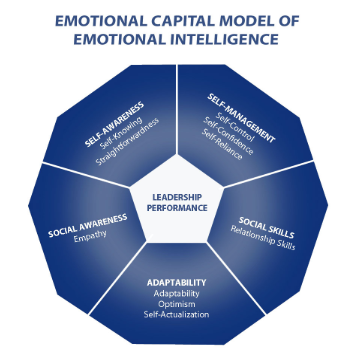
Dr Martyn Newman’s ten identified competencies for emotional intelligence. RocheMartin.
“The research is clear: emotions determine whether academic content will be processed deeply and remembered. Linking emotion to learning ensures that students find classroom instruction relevant.” Marc Brackett, Permission to Feel
Work with Us
Momentum Learning has been supporting Leaders, Teams, Teachers, Rangatahi and their Whānau to develop their social and emotional intelligence since 2020. Talk to us about exploring this for your organisation.
Let’s work together.
The art of thinking fast and speaking slow
Thinking on your feet is a vital skill for a leader. Even more so when under pressure.
Being able to manage competing information, sense-make, synthesise and strategise, whilst also humaning are vital skills in any leader's kete.
Mary-Anne Murphy
Thinking on your feet is a vital skill for a leader. Even more so when under pressure.
Being able to manage competing information, sense-make, synthesise and strategise, whilst also humaning are vital skills in any leader's kete.
In his book Thinking, Fast and Slow, Daniel Kahneman states,
"Intelligence is not only the ability to reason; it is also the ability to find
relevant material in memory and to deploy attention when needed."
But, whilst thinking fast is a skill, speaking slow is the skill in action. Let me explain.
Although a leader may be able to think quickly through complex situations or pieces of information, the art is in communicating this in a carefully considered manner, as opposed to thinking fast and speaking fast.
There is an art in speaking slowly.
This art requires that leaders hold space, listen to understand, and are vitally careful with how they speak, when they speak, what they speak, the tone in which they speak and the clarity of their message. This is the art of speaking slowly.
Consider a time when you have been on the receiving end of some hurtful speaking. Often it has come from the limbic brain, charged with emotion and hastily conveyed to you. And, I am sure, you can even remember most of what was said it had that much of an impact on you. It is our response that can make or break a relationship. When we are able to think fast and speak with less haste, we can communicate in a way that sets boundaries, as well as being heard.
The art of thinking fast and speaking slowly underpins a leader's ability to build better relationships, build better communication skills, and build better teams.
Best-selling author Nancy Duarte explored this within her practice by recording herself in a meeting. What she noticed spurred her on a journey of self-discovery into unpacking where her think fast, speak fast modality came from, and its impact on how she led and those she led.
Interested? Perhaps begin by collating some data, either through voice recording or videoing a meeting, or gaining feedback from your colleagues. Then you can start to explore this within your own leadership.
I’ll meet you there!